


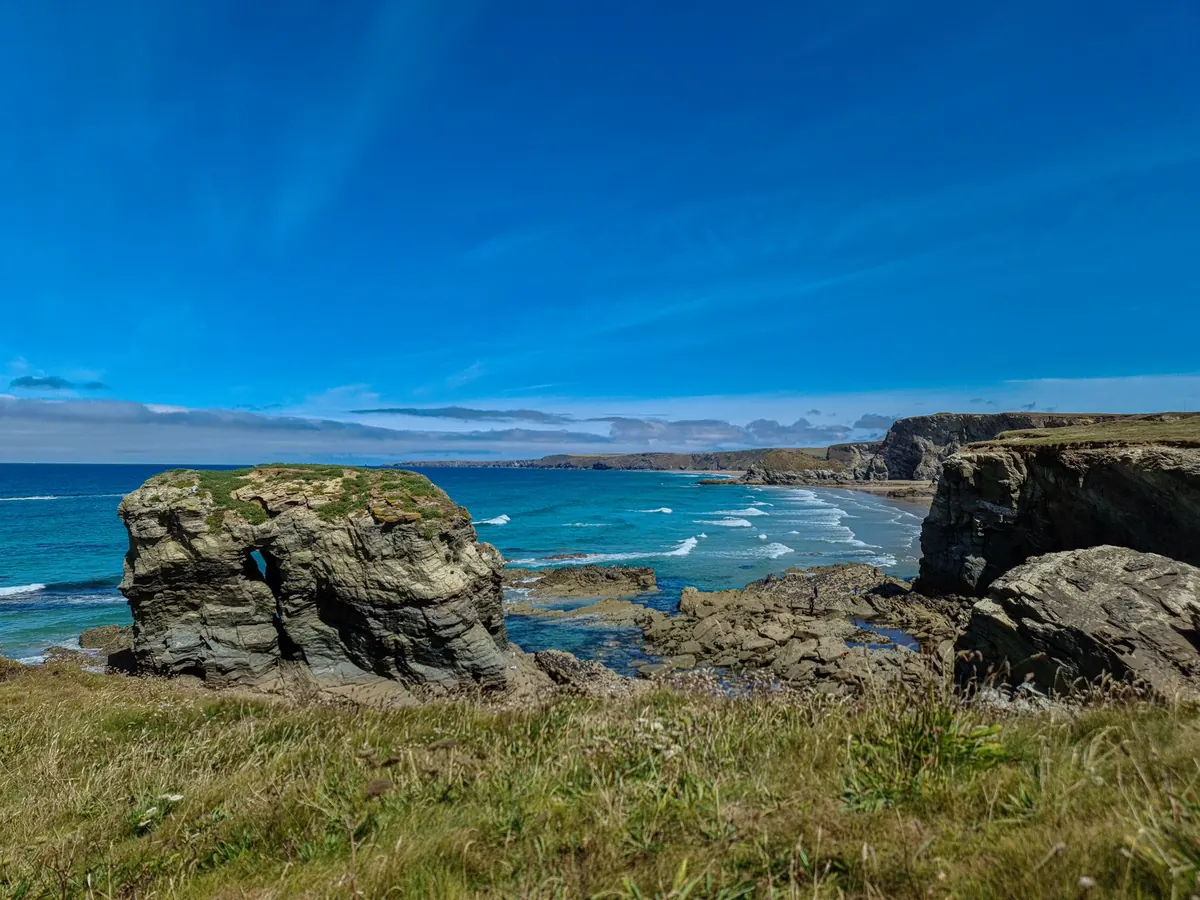


Cornwall's coastline does not do things by halves. In a single afternoon you can move from a wide, wind-whipped surfing beach to a hidden cove that only exists when the water drops. The difficulty is that everyone else knows about the famous ones. What follows is how to enjoy both — the big names at the right hour, the quiet ones when you need them, and the practical business of tides and parking that decides whether the day works at all.
Start with the tide table, not the satnav
Every beach in Cornwall is a different shape at 10am and at 4pm, and the difference is not small. At Kynance Cove on the Lizard, low water reveals a wide sweep of pale sand, sea stacks and caves; at high water there is barely room to lay out a towel. Perranporth is the opposite — miles of flat sand at low tide, a crowded strip when it turns.
Spring tides, which arrive around the full and new moon, push further up the beach and pull further back. Neap tides are gentler. High water also arrives roughly fifty minutes later each day, so a beach that worked perfectly on Monday may be cramped and busy by Wednesday.
Download a tide table before you leave the house — harbour websites, the National Trust and the BBC all publish them — and screenshot it. Mobile signal in Cornish coves is patchy at best, and the one place you cannot check anything is the place you most need to.
The famous ones, at the right hour
Porthcurno and Pedn Vounder
Porthcurno is the postcard: white sand, turquoise water, the Minack Theatre cut into the cliffs above. It is also the busiest, and the car park fills by mid-morning in summer. Go early, or come after four when the day trippers head home and the light turns golden. A stream runs across the beach, which is wonderful for small children and less wonderful for anyone who forgot a spare pair of socks.
At low tide you can walk around the headland to Pedn Vounder, a beach of startling beauty. You can also reach it from Treen, but that path is steep, loose underfoot and not one for flip-flops or young children.
Kynance Cove
Kynance deserves the fuss. The walk down from the National Trust car park takes about ten minutes and is genuinely steep; the café at the bottom is a welcome sight on the way back up. Arrive at low water to see the caves and the serpentine rock at their best. At high tide, with a swell running, there may be no beach at all.
If you want surf, head for Fistral in Newquay, Watergate Bay or Sennen. Fistral has the infrastructure; Sennen has the sunsets and a village that still feels like a village.
The quiet ones that reward a walk
If you are willing to walk for twenty minutes, the crowd thins dramatically.
Porth Joke
Also called Polly Joke, tucked between Crantock and Holywell Bay. Park at the National Trust car park at West Pentire and follow the path down through the valley. There is a stream, no lifeguard, no café, and often no more than a dozen people. In early summer the wildflower fields above the beach are worth the trip on their own.
Nanjizal
Between Porthgwarra and Land's End, reached on foot from either. Twenty minutes down a track, no facilities, no parking at the beach, and a sea cave known as the Song of the Sea. It is one of the last genuinely hard-to-reach beaches in west Cornwall, and it feels like it.
Gunwalloe and Porth Nanven
Gunwalloe's Church Cove, on the Lizard, has a medieval church sitting almost on the sand and a National Trust car park a short walk away. Porth Nanven, at the end of the Cot Valley near St Just, is a boulder beach facing west that catches the sunset; the car park takes perhaps a dozen cars, so go late or go early. These are the beaches locals keep quiet about, so treat them kindly — take your rubbish home and do not block the lanes.
Parking, without losing your temper
Parking is the single thing most likely to ruin a beach day in Cornwall.
- Arrive before 9.30am in July and August, or after 4pm. The middle of the day is a losing game.
- Use National Trust car parks where you can. Members park free, and the money goes back into the coast. Cornwall Council car parks are usually pay and display.
- Take coins even if the machine claims to accept cards. Signal failures are common and rarely announced.
- Never park in a passing place, on double yellows, or across a farm gate. Farmers need access, and tractors do not brake for anyone.
- Screenshot your route before you set off. Narrow lanes between high hedges are not the place to discover you have no signal.
- If a car park is full, have a second choice in mind. There is almost always another cove fifteen minutes away.
Swimming, dogs and other things that catch people out
Swim between the red and yellow flags where RNLI lifeguards are on patrol, typically from around 10am to 6pm through the main season. A red flag means no swimming, whatever the water looks like. If you are caught in a rip current, do not fight it — swim parallel to the shore until you are clear, then head in. Cold water is a shock even in August, so walk in rather than jumping. If you have a heart condition or are pregnant, have a word with your GP before taking up cold-water swimming.
Dogs are banned on many Cornish beaches between Easter and October, but the rules vary from beach to beach even within a few miles. Read the signs at the entrance rather than trusting a website written three years ago. And resist the urge to dig deep holes in the sand — collapses happen, and they happen fast.
The short version
If you take one thing from this, make it the tide. Plan the day around the water and everything else falls into place. Get to Porthcurno or Kynance before nine. Save the quiet coves for the middle of the day, when the famous ones are heaving. Leave the last hour of light for a west-facing beach such as Sennen or Porth Nanven. Take cash for parking, a jumper for the evening, and a bag for your rubbish. Cornwall's beaches are not a museum — they are working, living places, and the locals who share them will thank you for treating them that way.
Photo: Howard Senton / Pexels